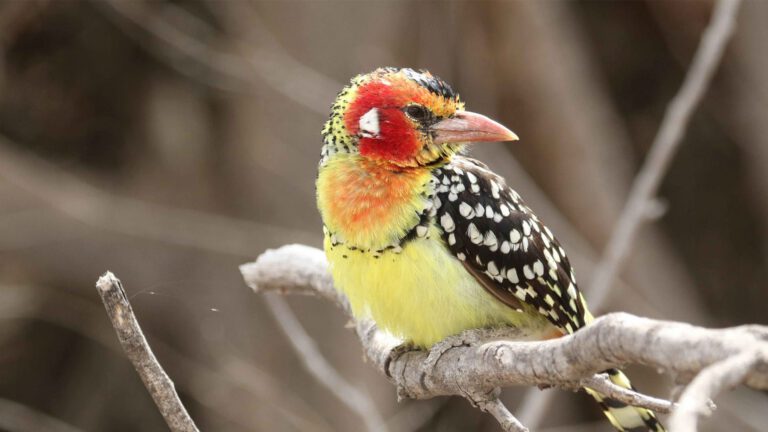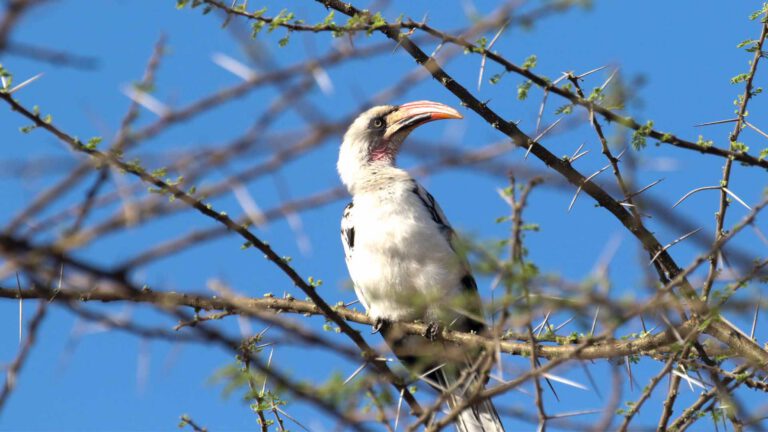

You don’t need to be a birder to stop for these. Here are ten that make almost everyone reach for the camera.
- Lilac-breasted Roller: lilac, turquoise and cinnamon, perched on dead branches across the savanna. Common in Tarangire and the Serengeti.
- Hartlaub’s Turaco: green with brilliant red flight feathers that flash when it flies. Arusha National Park forest.
- Superb Starling: metallic blue-green with an orange belly, and often right beside the lodge.
- Little Bee-eater: tiny, green and gold, hawking insects from low perches.
- Cinnamon-chested Bee-eater: the forest-edge cousin, in Arusha National Park.
- Malachite Kingfisher: a jewel-bright kingfisher smaller than your hand, by quiet water.
- Yellow-collared Lovebird: green with a yellow collar and a black head. A Tanzanian endemic in Tarangire.
- Fischer’s Lovebird: orange face and green body. Another endemic, in the Serengeti.
- Golden-winged Sunbird: bronze with golden wings, in the highland forest around Ngorongoro.
- Grey Crowned Crane: not bright exactly, but its golden crown makes it one of Africa’s most striking birds. Ngorongoro Crater.
Seeing them
Most of these turn up on any northern-circuit safari. If you want the turacos, sunbirds and endemics, add a birding day or choose one of our birding tours.
Your questions answered
What is Tanzania’s national bird?
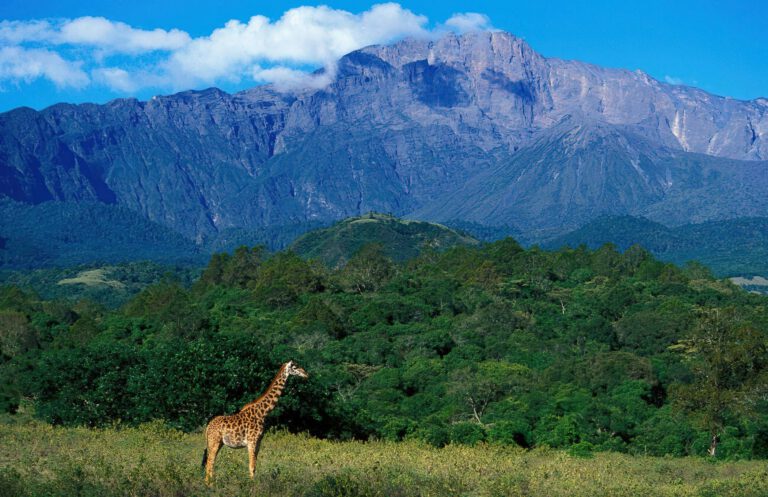
The Grey Crowned Crane is often named as a symbol, although it’s more formally Uganda’s national bird. Tanzania’s national animal is the giraffe.
Which is the most photographed bird?
Almost certainly the Lilac-breasted Roller.
Can I see these on a normal safari?
Most of them, yes.