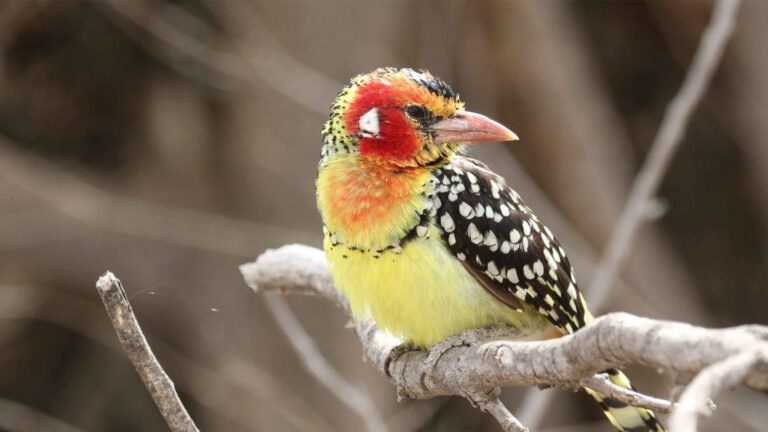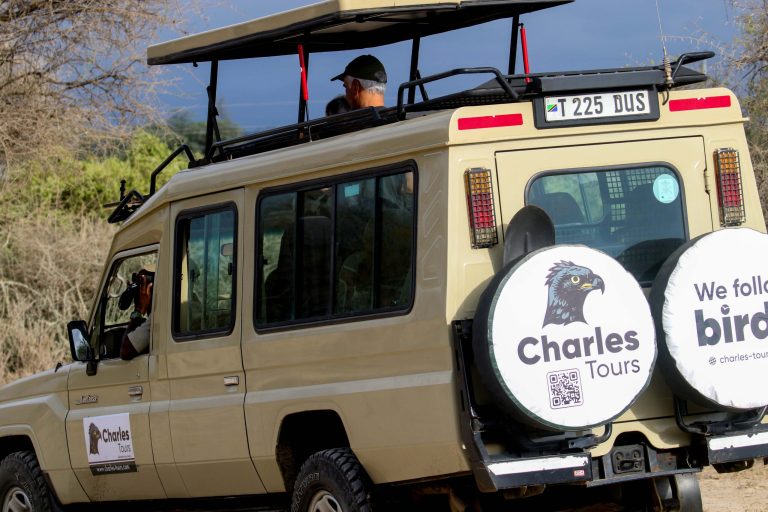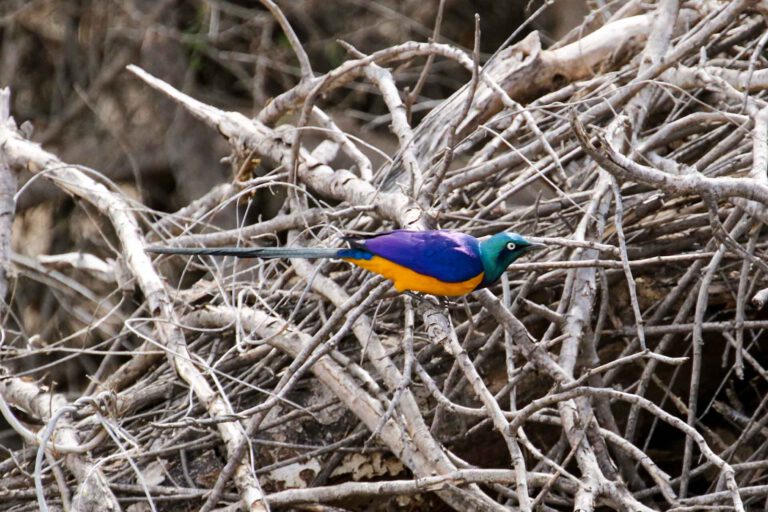

A birding safari visits many of the same national parks as a traditional wildlife safari, often using the same comfortable 4×4 vehicle. The difference is in the pace of the day: where we stop, what we look for, and how much time we spend observing each species.
Here’s what a typical day on a birding safari in Tarangire National Park might look like. It may differ depending on the number of days we spend in a particular place. Each evening, we discuss the schedule for the next day.
6:00 AM — Breakfast and the Dawn Chorus
The day begins early, with coffee or a full breakfast before departure (sometimes we depart with a packed breakfast). As the first light appears, the bush comes alive with birdsong. Your guide helps identify calls and spot early activity, making even the journey from the lodge part of the birding experience.
6:45–10:00 AM — Prime Birding Hours
We enter the park early and explore at a relaxed pace, watching for movement in the trees, scanning open country, and listening for distinctive calls.
A flock of Yellow-collared Lovebirds might prompt a stop for observation and photography before we continue in search of other birds and iconic African wildlife. Your guide helps identify species, maintain a checklist, and explain their behaviour, habitats and distribution.
10:45 AM–3:00 PM — Exploring Different Habitats
As bird activity changes through the day, we adapt our approach. We scan the skies for soaring raptors, explore suitable habitats for different species, and visit water sources when conditions are favourable.
A picnic lunch in the field allows us to continue exploring, while a relaxing break at the lodge or camp can be arranged when preferred. Every day is flexible, shaped by bird activity, your interests, and the conditions on the ground.
3:30 PM–Sunset — Afternoon Birding
As temperatures ease, bird activity may increase again. We take advantage of the afternoon light to observe birds, photograph wildlife (our photography tips), and explore areas that offer good opportunities for new sightings.
We plan our return according to park regulations and closing times, making the most of the available daylight.
Evening — Reviewing the Day’s Sightings
After the day’s adventure, we review the checklist together, confirm identifications where possible, and discuss species we hope to find the following day. It’s a chance to reflect on memorable sightings and prepare for the next stage of your birding journey.
The difference is simple: we follow the birds, adapt to the moment, and make every stop count.
Whether you’re new to birdwatching or an experienced birder building your Tanzania list, Charles Tours creates birding experiences around your interests.
Your questions answered
Do I need to be an expert birder?
Not at all. Many of our guests are beginners or travelling with a birder partner. Your guide will explain as much or as little as you want.
Will we still see big animals?
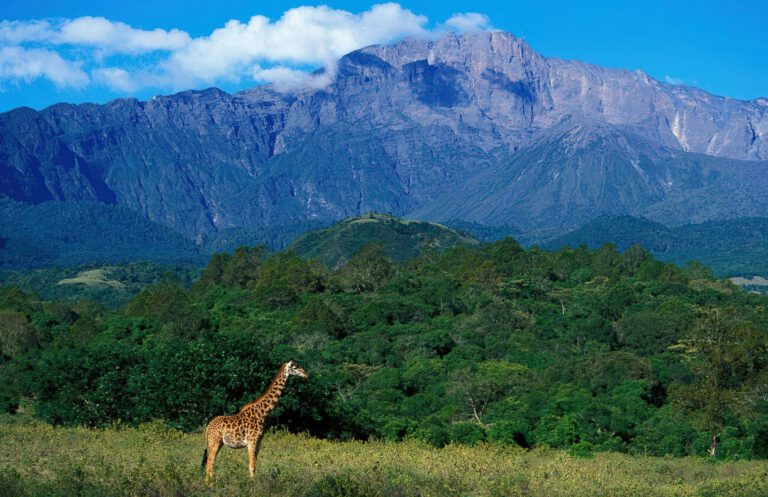
Yes. The parks are the same as on any safari, so elephants, lions and giraffes are seen every day. We just stop for birds more often.
How many hours a day are we out?
Usually from about 6:30 to sunset, with a midday break. We can shorten any day if you prefer.
Charles Tours — We Follow Birds.