

Tanzania Wildlife Guide
The animals, trees and reptiles you can expect to see on safari with us, where each one lives and when to go. Filter by destination to plan your trip.
Wildlife species in Tanzania
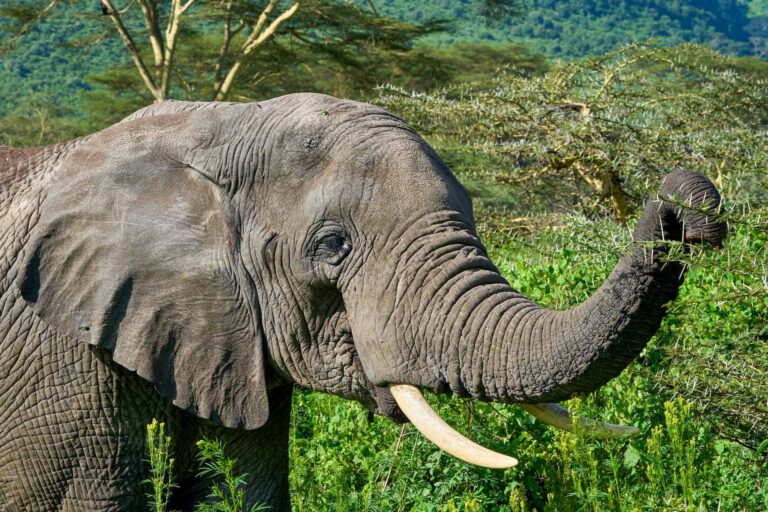
African elephant
Loxodonta africana
Tarangire’s big herds are the classic sight: families drifting between baobabs to the river in the dry season.
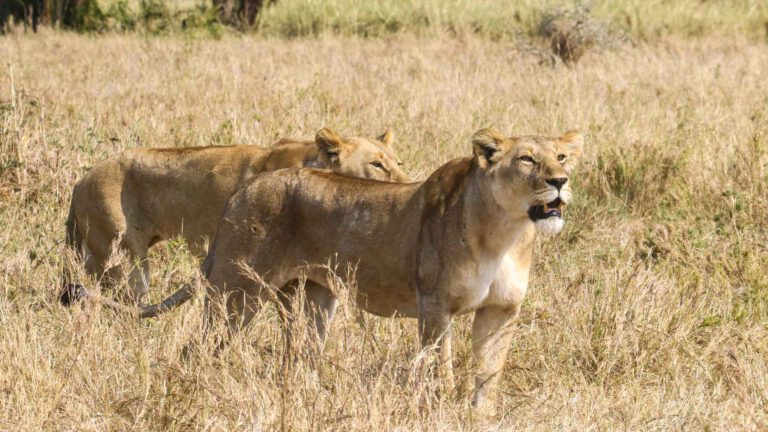
Lion
Panthera leo
The Serengeti holds one of the largest lion populations left in Africa. Prides of twenty are not unusual.
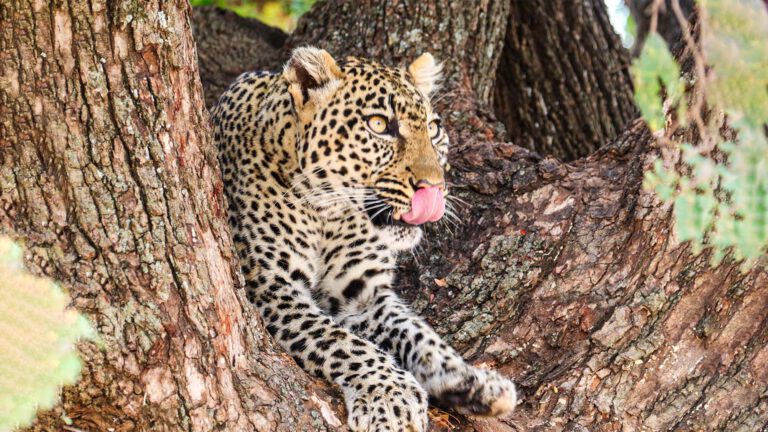
Leopard
Panthera pardus
Secretive and beautiful. The Seronera valley’s sausage trees are the best place in Africa to find one by day.
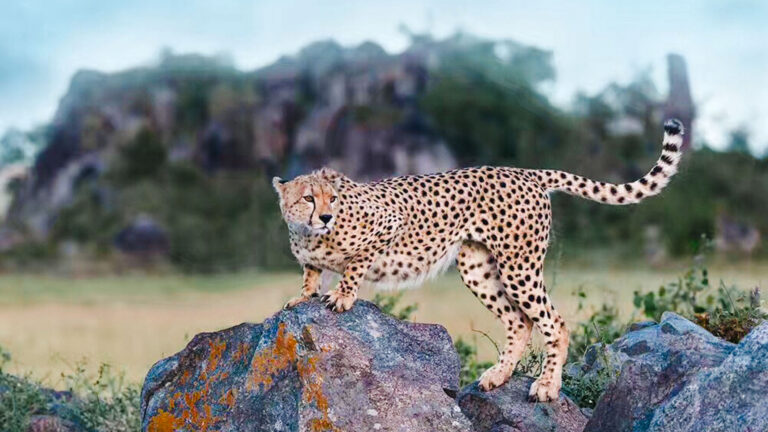
Cheetah
Acinonyx jubatus
Built for the short grass plains. Watch one scan from a termite mound in the southern Serengeti.
Black rhino
Diceros bicornis
Critically endangered and closely guarded. The Ngorongoro Crater is the most reliable place in Tanzania to see one.
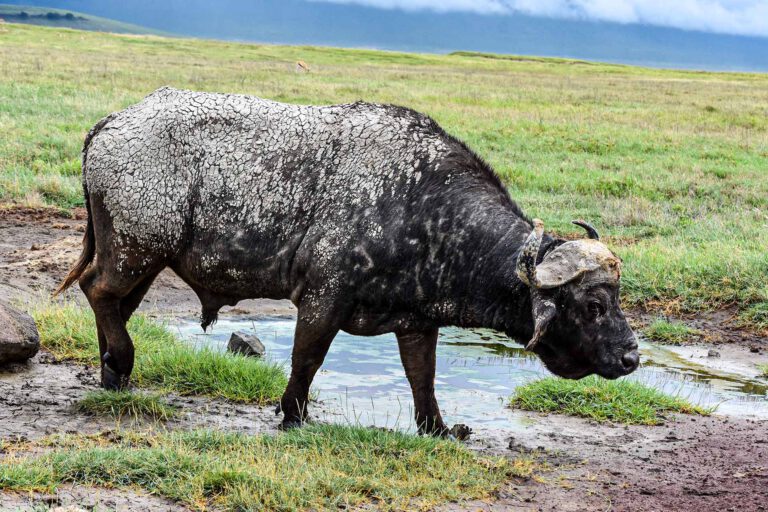
Cape buffalo
Syncerus caffer
The Big Five’s heavyweight. Herds of several hundred are a daily sight in Arusha National Park and the crater.
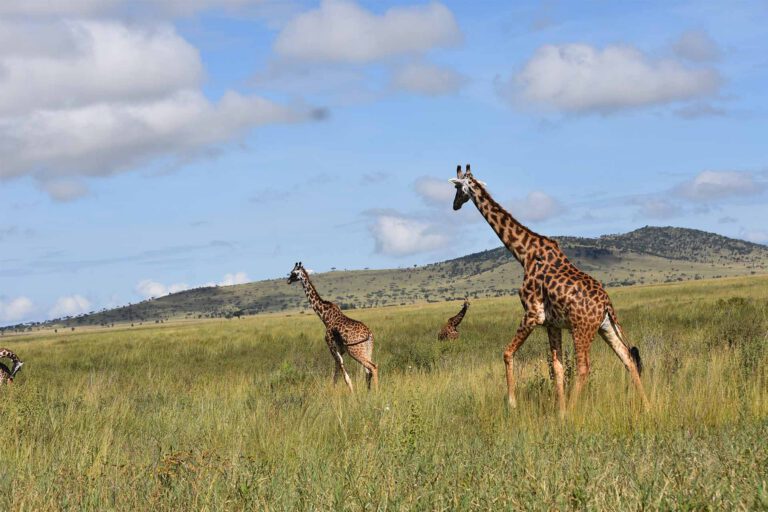
Masai giraffe
Giraffa tippelskirchi
Tanzania’s national animal, with jagged star-shaped patches. Common almost everywhere except inside the crater.
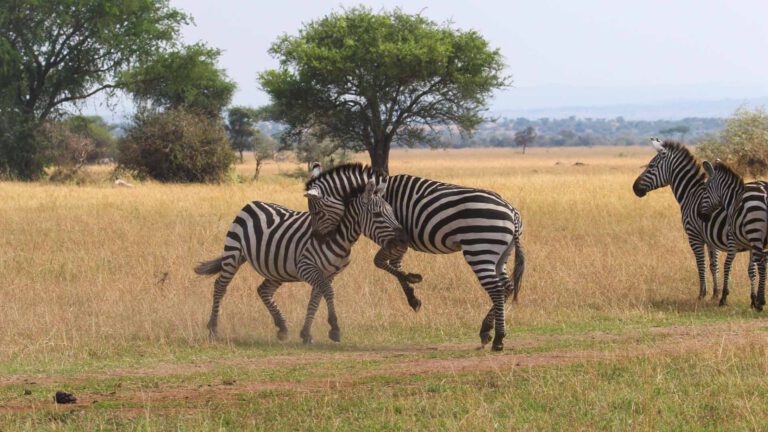
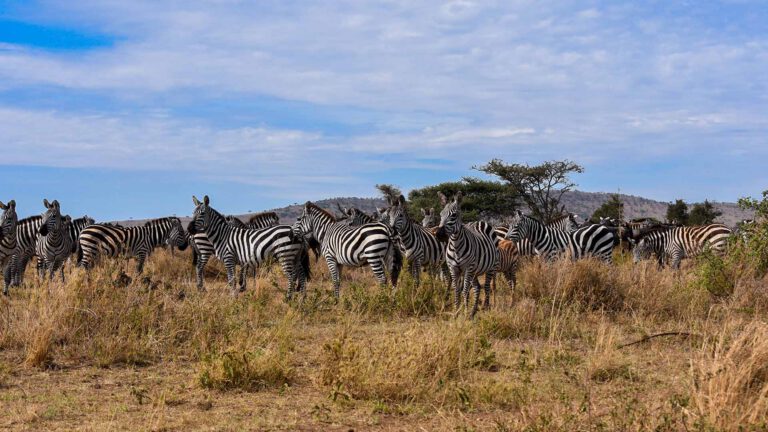
Plains zebra
Equus quagga
The migration’s other half. Hundreds of thousands of zebra move with the wildebeest across the Serengeti.
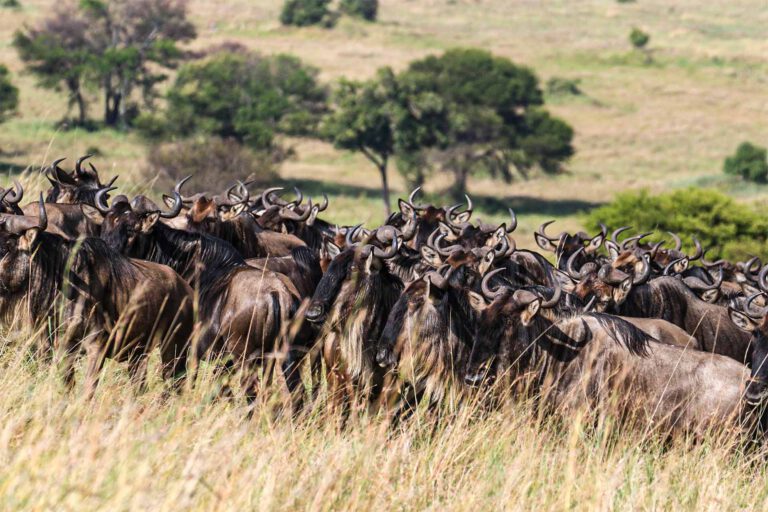
Blue wildebeest
Connochaetes taurinus
The Great Migration itself: 1.5 million animals circling the Serengeti, calving in the south each February.
Hippopotamus
Hippopotamus amphibius
Noisy, territorial and surprisingly fast. The Serengeti’s hippo pools hold hundreds in a single bend of river.
Spotted hyena
Crocuta crocuta
Clever, social and the crater’s top predator by numbers. Listen for the whooping call after dark.
African wild dog
Lycaon pictus
Africa’s most endangered large carnivore. Ruaha is one of the last strongholds, and sightings there are a privilege.
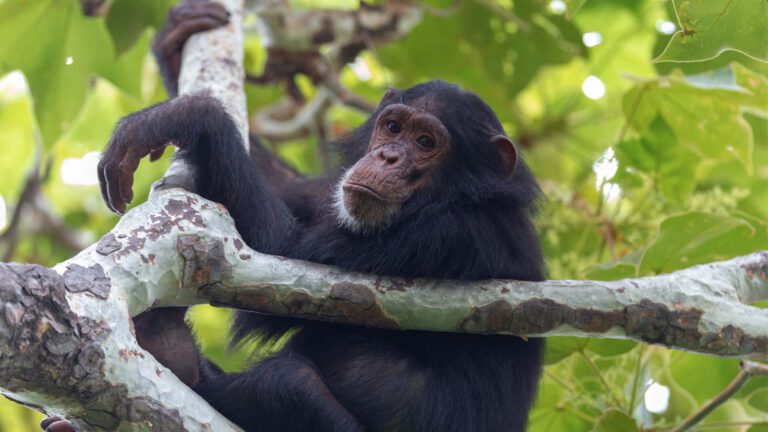
Chimpanzee
Pan troglodytes
Our closest living relatives, habituated over sixty years of research at Gombe and Mahale.
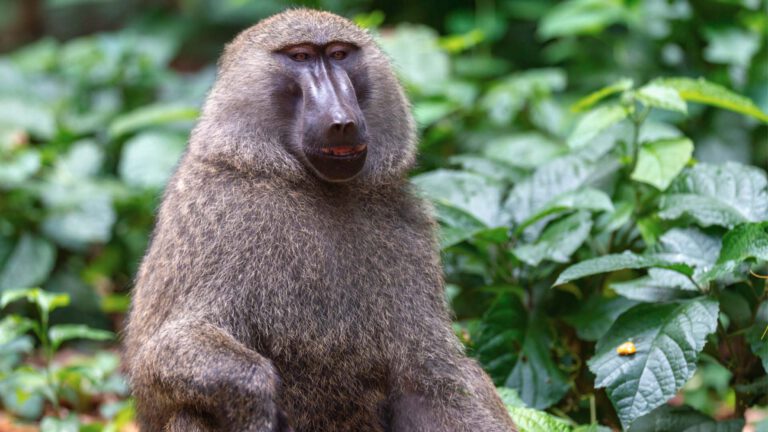
Olive baboon
Papio anubis
Lake Manyara’s troops are some of the biggest in Africa, and the most entertaining hour of any game drive.
Black-and-white colobus
Colobus guereza
Long white capes and a leap that seems to hang in the air. Arusha National Park’s forest is full of them.
Udzungwa red colobus
Piliocolobus gordonorum
Found nowhere else on earth. One of two endemic monkeys that make the Udzungwa Mountains famous.
Impala
Aepyceros melampus
The graceful antelope you will see most often, and the leopard’s favourite meal.
Greater kudu
Tragelaphus strepsiceros
Spiral horns and a ghostly grey coat. Ruaha is the best park in East Africa for this shy antelope.
Nile crocodile
Crocodylus niloticus
Ancient, patient and enormous. The Grumeti River’s crocodiles wait all year for the migration to cross.
Baobab tree
Adansonia digitata
The upside-down tree, some over a thousand years old. Tarangire and Ruaha are the great baobab landscapes of Tanzania.
Umbrella thorn acacia
Vachellia tortilis
The flat-topped tree of every safari photograph. Giraffes browse it and leopards sleep in it.
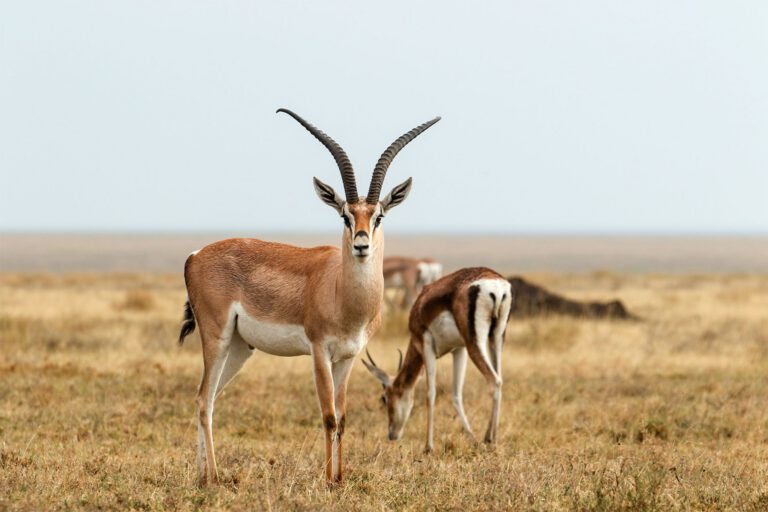
Grant’s gazelle
Nanger granti
The tall, pale gazelle of the open plains, happy a long way from water. Look for the white rump that reaches above the tail.
Blue monkey
Cercopithecus mitis
The quiet grey-blue monkey of Tanzania’s forests, usually noticed by a shaking branch high in the canopy.
Usambara three-horned chameleon
Trioceros deremensis
A giant among chameleons, with three horns like a tiny triceratops. It lives only in the forests of the Eastern Arc Mountains.
Sanje mangabey
Cercocebus sanjei
Discovered by science only in 1979 and found nowhere outside the Udzungwa Mountains. A habituated group can be tracked near Sanje.
Red-tailed monkey
Cercopithecus ascanius
A small forest monkey with a white nose spot and a rust-red tail. At Gombe it shares the forest with chimpanzees, and sometimes with blue monkeys it has interbred with.
Sitatunga
Tragelaphus spekii
A shy, swamp-living antelope with long, splayed hooves that let it walk on soft mud and floating vegetation.
Fringe-eared oryx
Oryx beisa callotis
A desert-adapted antelope with long, straight horns and tufted ears, able to go for long periods without drinking.
Gerenuk
Litocranius walleri
A long-necked antelope that stands on its hind legs to browse on leaves other antelope cannot reach.
Lesser kudu
Tragelaphus imberbis
A shy, striped antelope of dense dry bush. Males carry long spiral horns.
Spotted-necked otter
Hydrictis maculicollis
A sleek otter with a creamy, spotted throat that needs clear, fish-rich water.
Keep exploring
Plan around what you want to see
Every guide links to the destinations and safaris where it fits, so you can build a trip around a species, a bird list or an activity.
Start planning your safari
Tell us your dates and the birds or animals you most want to see. We’ll reply within 24 hours with a route and a full quote.