

Birds of Tanzania
Endemics, near-endemics and the specialities our birding guides find on every trip. Filter by destination or by type to see what you could add to your list.
Tanzania bird species
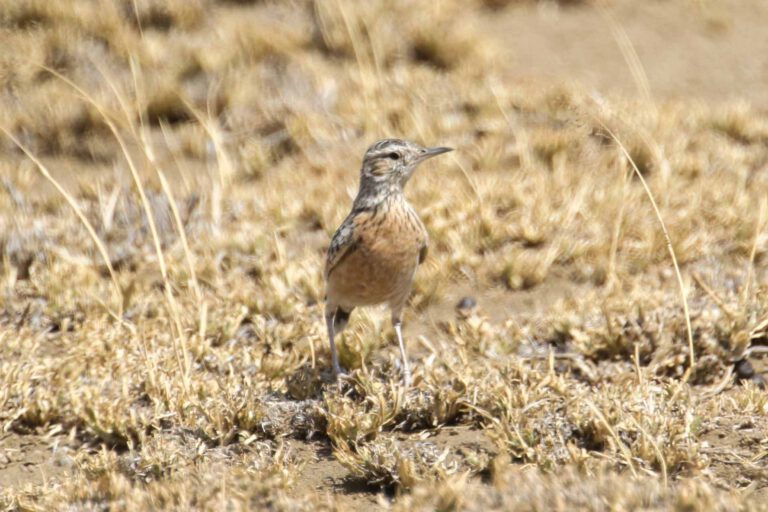
Beesley’s Lark
Chersomanes beesleyi
Fewer than a hundred birds left, all on one patch of plain north of Arusha. Nowhere else on earth.
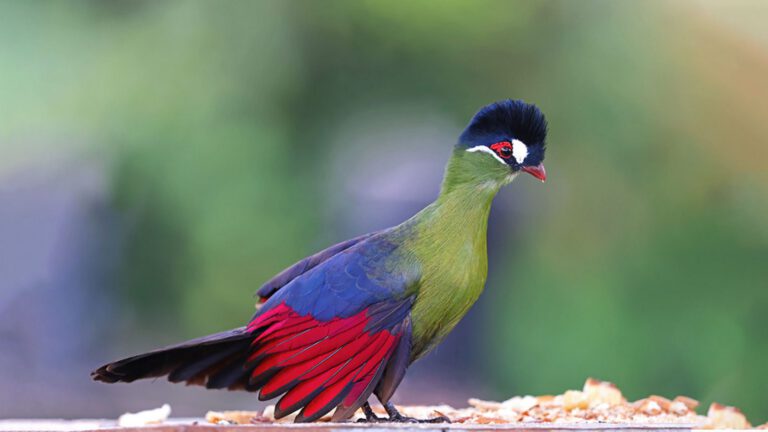
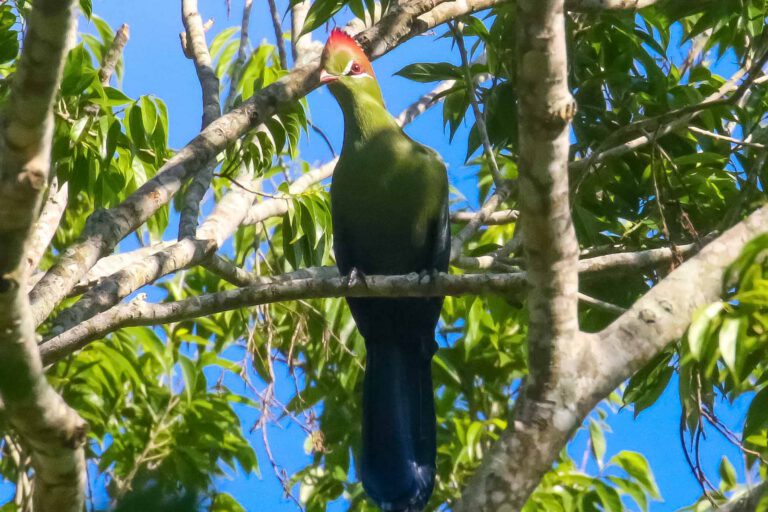
Hartlaub’s Turaco
Tauraco hartlaubi
A flash of crimson wings in the forest canopy. Arusha National Park is the easiest place to see one.
Fischer’s Turaco
Tauraco fischeri
The coastal and Usambara forests’ turaco, with a red crest tipped white. A target bird for every East Usambara trip.
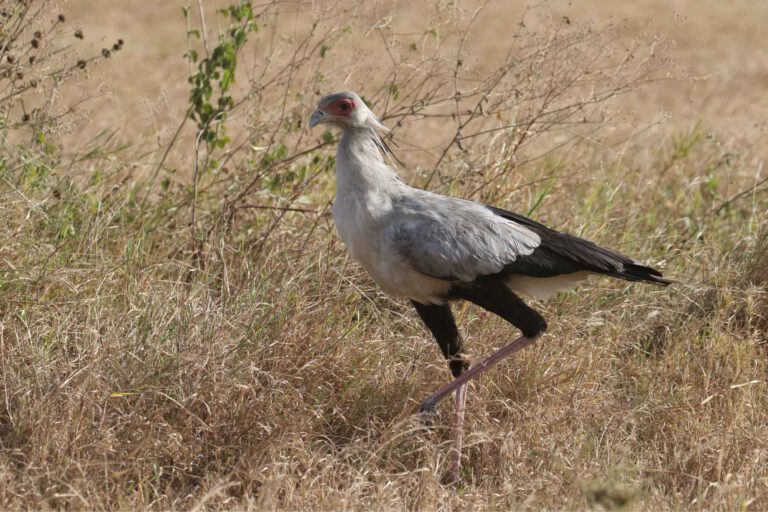
Secretarybird
Sagittarius serpentarius
A raptor that hunts on foot, stamping snakes to death in the grass. Unmistakable striding across the plains.
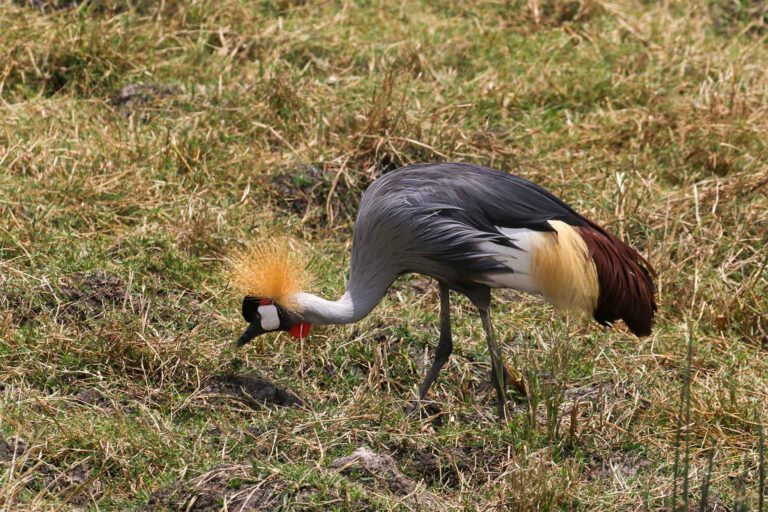
Grey Crowned Crane
Balearica regulorum
The golden crown, the dance and the bugling call. Endangered, but still a daily sight on the crater floor.
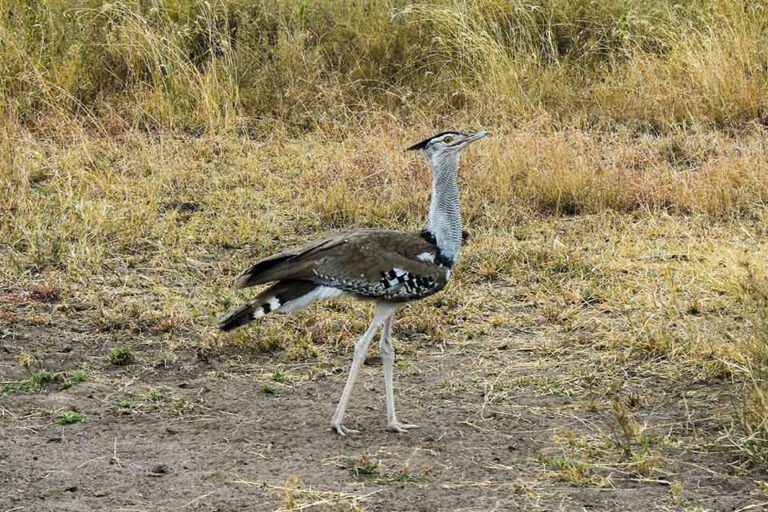
Kori Bustard
Ardeotis kori
The heaviest flying bird in the world, pacing the plains with its neck puffed up in display.
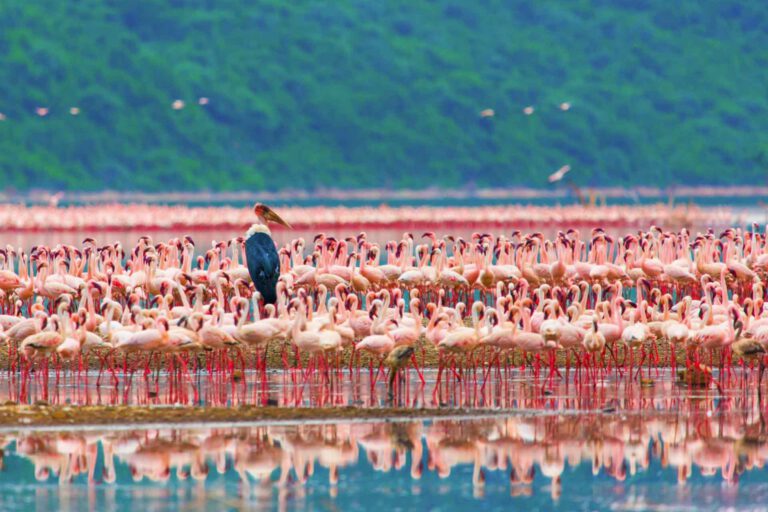
Lesser Flamingo
Phoeniconaias minor
Pink crowds on the soda lakes. Numbers rise and fall with the water, so your guide checks before you go.
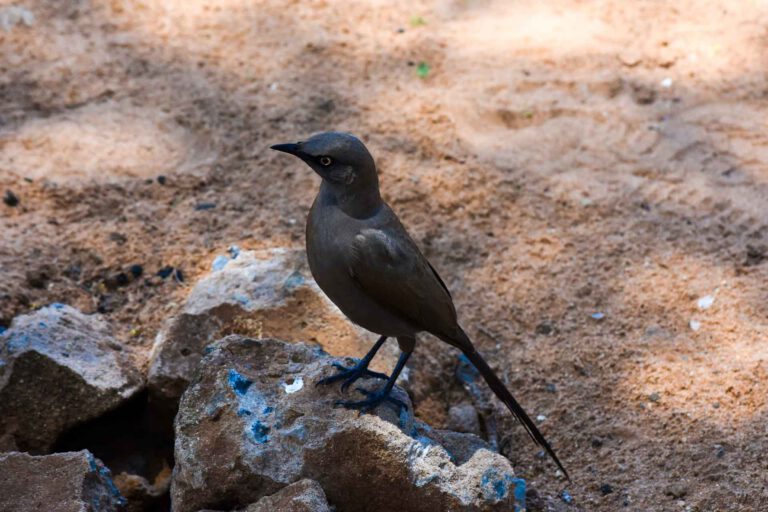
Ashy Starling
Lamprotornis unicolor
Tanzania’s own starling: long-tailed, dusty grey and common around the baobabs of Tarangire.
Yellow-collared Lovebird
Agapornis personatus
Green, yellow and masked in black, chattering in flocks around the baobabs. A Tanzanian endemic you will hear before you see.
Fischer’s Lovebird
Agapornis fischeri
Orange face, green body and a fast, chattering flight. The Serengeti’s own lovebird, and a Tanzanian endemic.
Lilac-breasted Roller
Coracias caudatus
The most photographed bird in Africa, with eight colours and a rolling display flight to match.
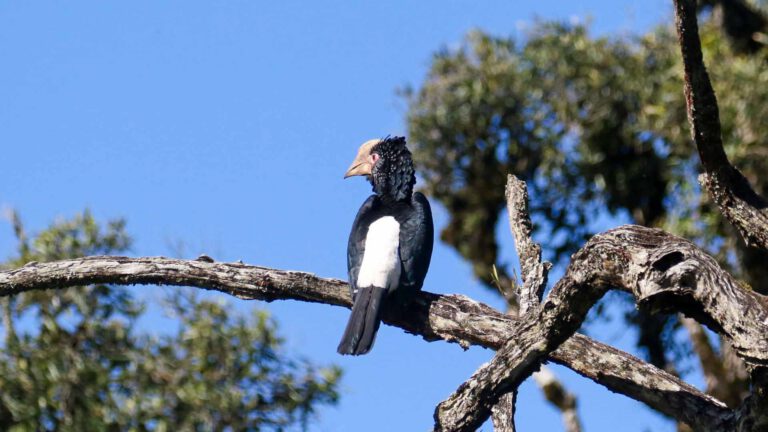
Silvery-cheeked Hornbill
Bycanistes brevis
A huge forest hornbill with a cream casque, whooshing overhead with every wingbeat.
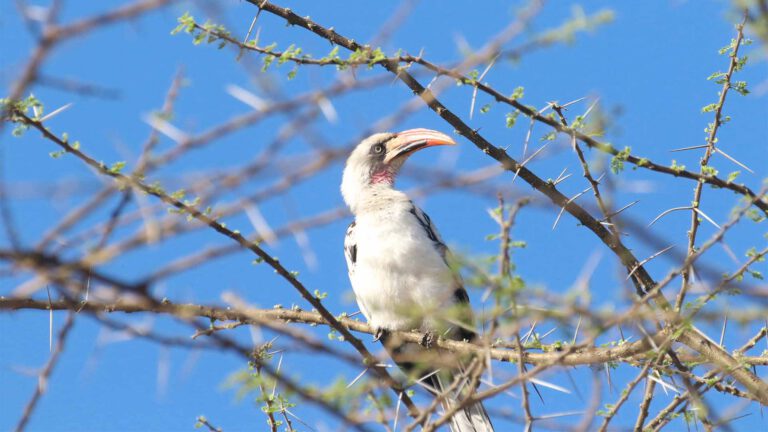
Von der Decken’s Hornbill
Tockus deckeni
The small dry-country hornbill with the red and ivory bill, hopping along the road ahead of the vehicle.
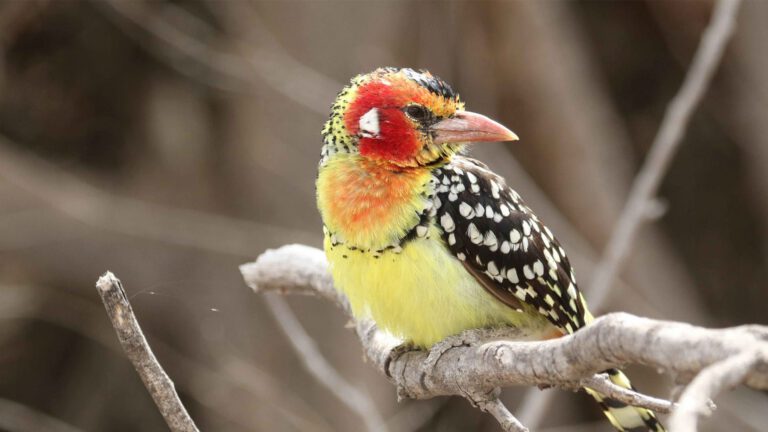
Red-and-yellow Barbet
Trachyphonus erythrocephalus
Spotted like a leopard and loud as a duet. Pairs sing together from termite mounds in the dry bush.
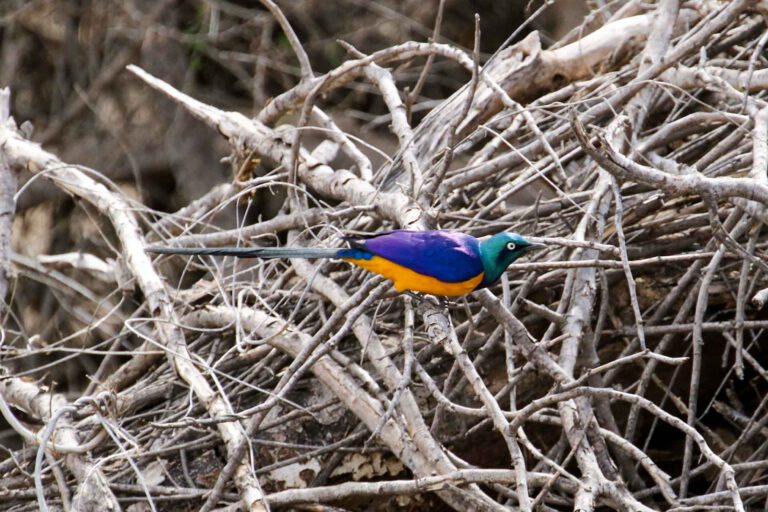
Golden-breasted Starling
Lamprotornis regius
Arguably the most beautiful starling in the world, a bird of the dry northeast with a tail longer than its body.
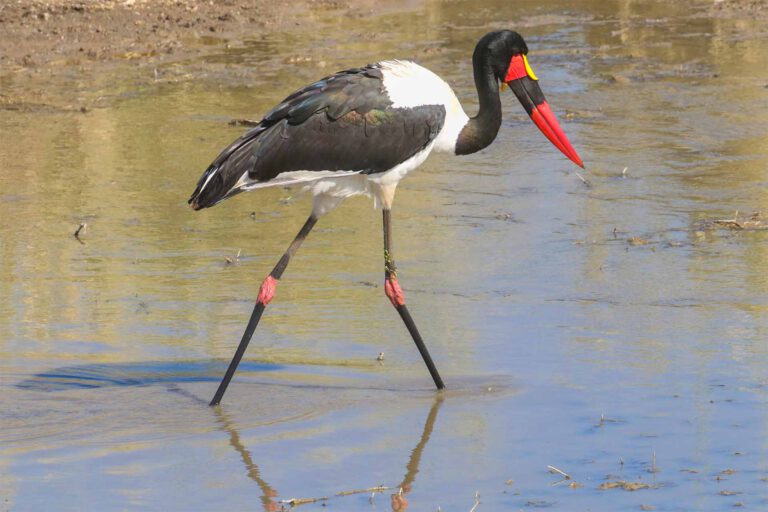
Saddle-billed Stork
Ephippiorhynchus senegalensis
Nearly 1.5 metres tall with a red, black and yellow bill. Tanzania’s most elegant wading bird.
Bar-tailed Trogon
Apaloderma vittatum
A jewel of the montane forest that sits motionless for minutes, then is simply gone.
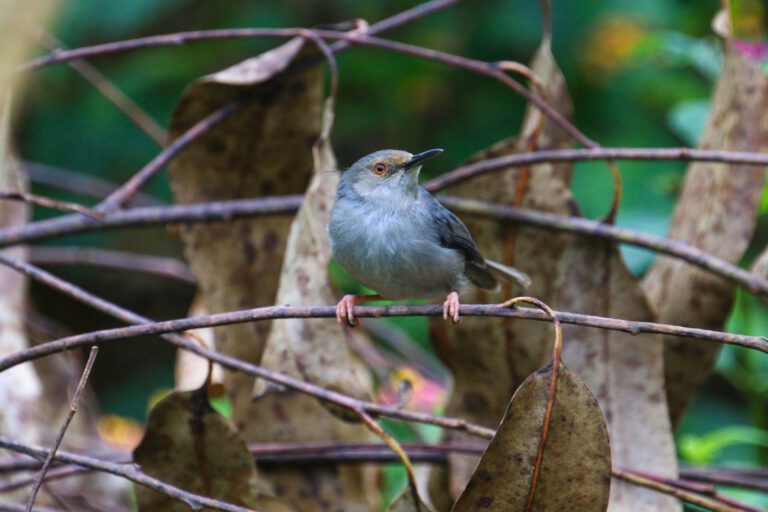
Long-billed Tailorbird
Artisornis moreaui
Critically endangered and almost impossible to see anywhere but the East Usambaras. A bird for serious listers.
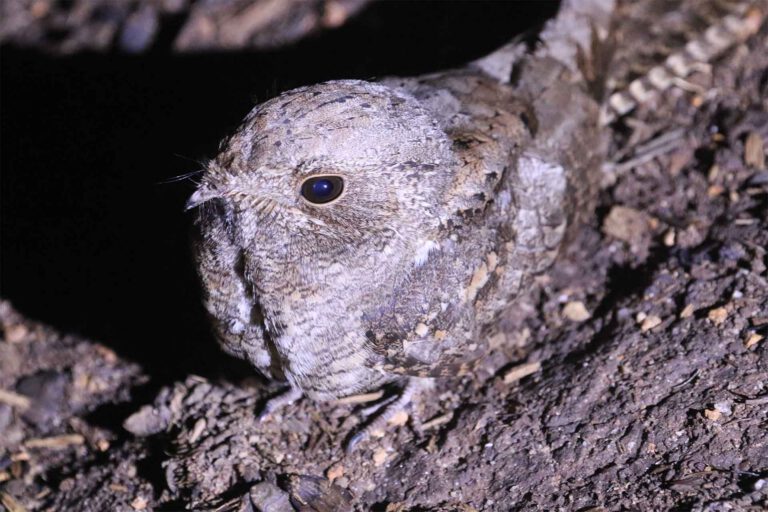
Usambara Nightjar
Caprimulgus guttifer
A ghost of the forest edge at dusk, and one of the Usambaras’ special birds.
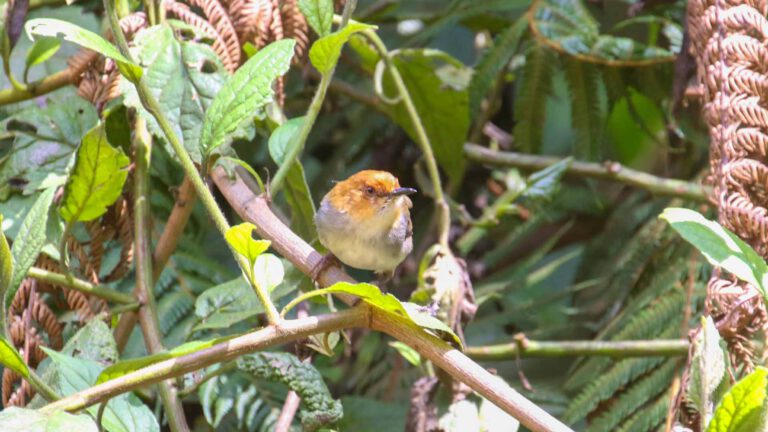
Red-capped Forest Warbler
Artisornis metopias
Also called the African Tailorbird. A tiny, restless bird of the montane undergrowth with a rusty cap.
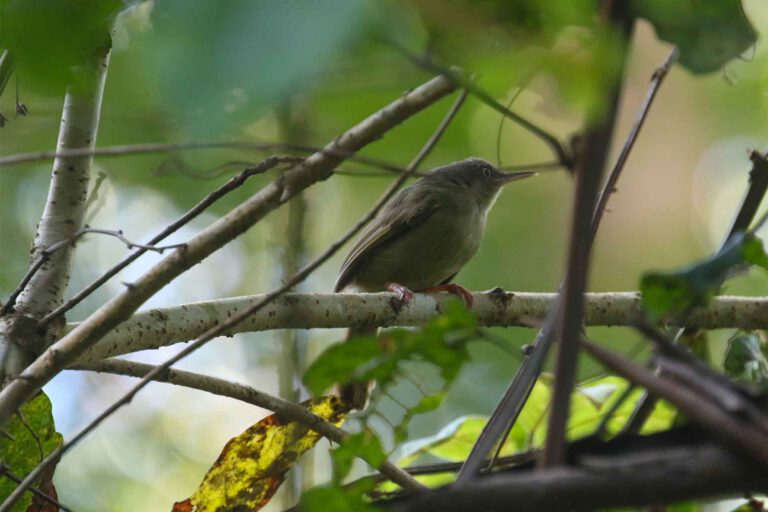
Kretschmer’s Longbill
Macrosphenus kretschmeri
A skulking, long-billed warbler of coastal and East Usambara thickets, named for the Baltic German naturalist who collected it.
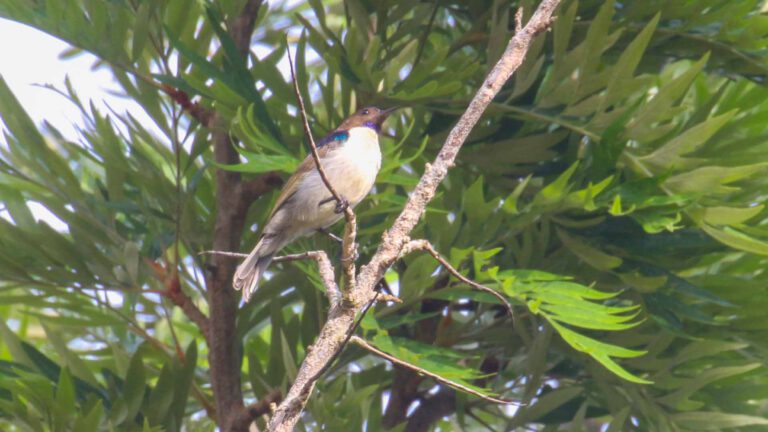
Uluguru Violet-backed Sunbird
Anthreptes neglectus
A quiet, canopy-loving sunbird of the Eastern Arc forests, with a violet back that shows only in good light.
Rufous-winged Sunbird
Cinnyris rufipennis
Discovered in 1981 and found only in the Udzungwa Mountains. One of the most restricted birds in Africa.
Udzungwa Forest Partridge
Xenoperdix udzungwensis
Discovered in 1991 from a cooking pot. A partridge with Asian relatives, found only in the Udzungwa forests.
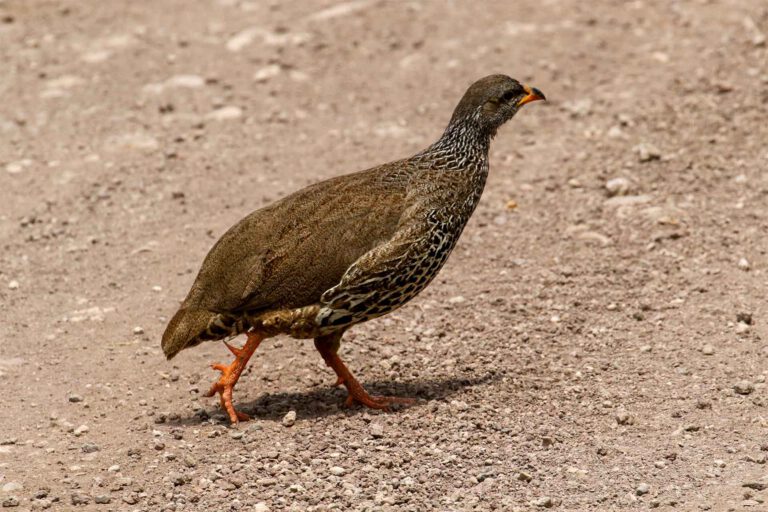
Hildebrandt’s Francolin
Pternistis hildebrandti
A handsome, spotted francolin of rocky hillsides and crater slopes, calling harshly at dawn.
Grey-breasted Spurfowl
Pternistis rufopictus
A Serengeti endemic, and an easy one: pairs feed beside the road near Seronera every morning.
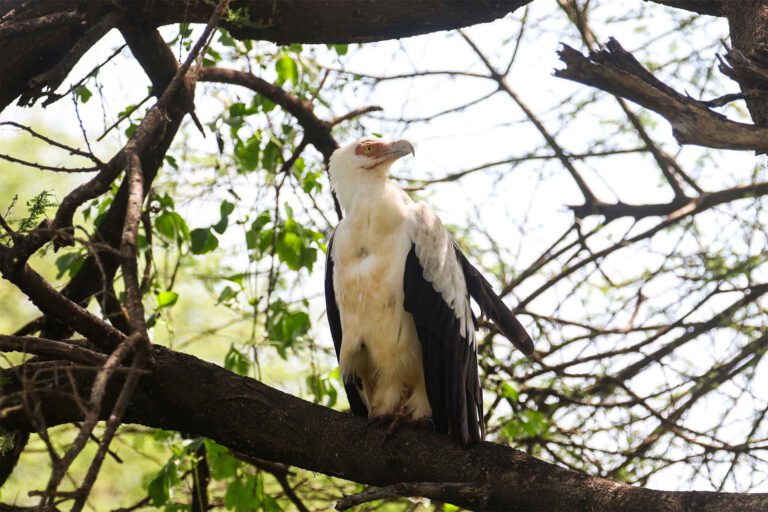
Palm-nut Vulture
Gypohierax angolensis
A vulture that eats palm fruit. Black and white, with a bare pink face, along Lake Tanganyika and the eastern rivers.
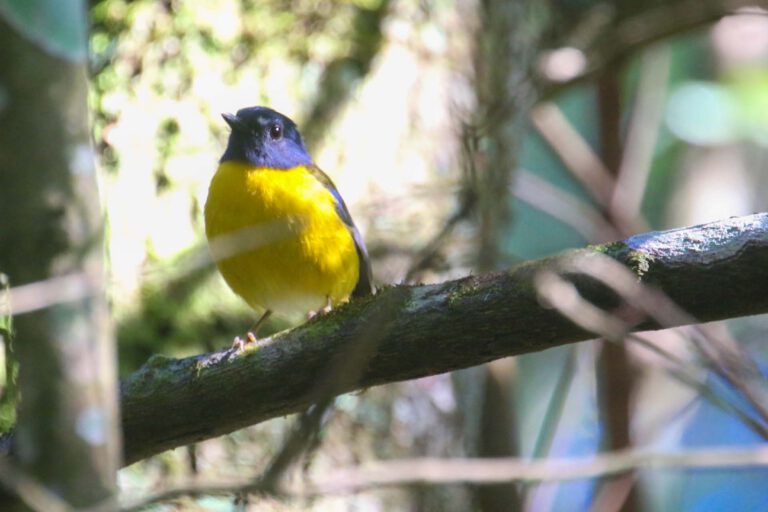
White-starred Robin
Pogonocichla stellata
A yellow-and-blue robin of the forest floor with a white star on its forehead, singing in the half-light.
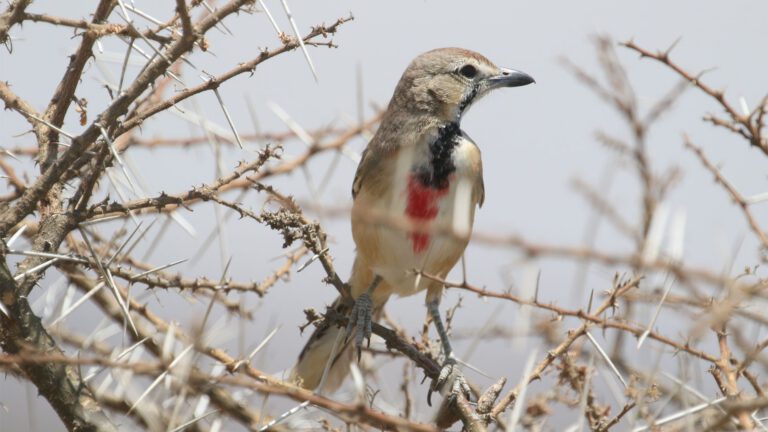
Rosy-patched Bushshrike
Telophorus cruentus
A duet from the top of a thorn bush, with a rose-pink patch down the breast. A dry-country gem.
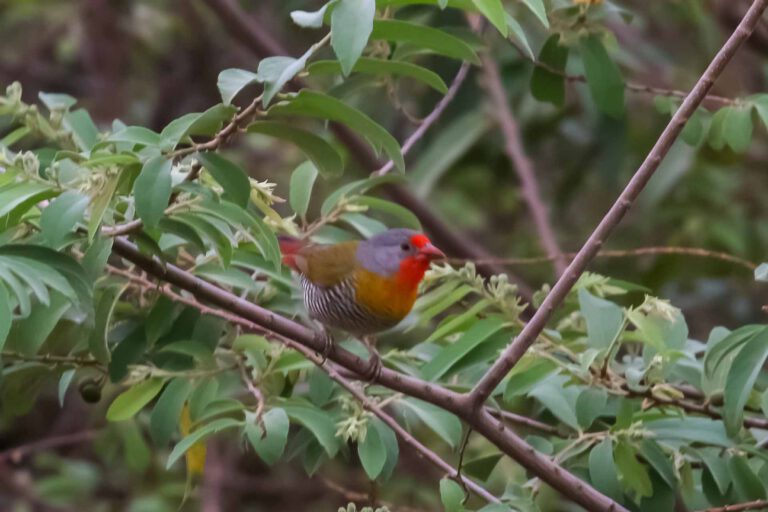
Green-winged Pytilia
Pytilia melba
A small waxbill with a red face, green wings and a barred belly, feeding quietly on the ground in the thorn bush.
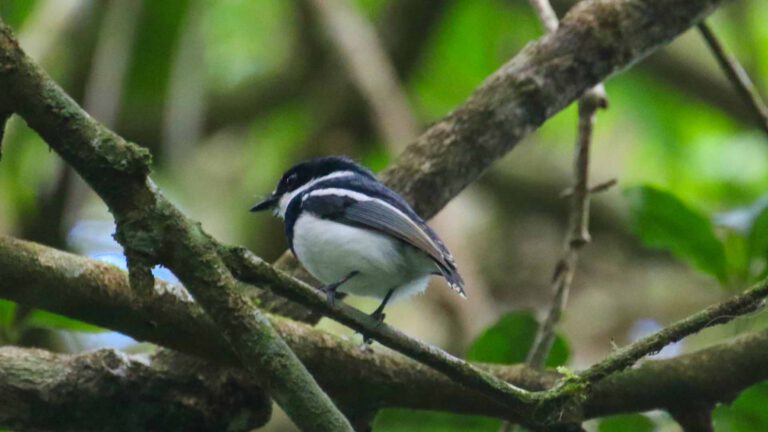
Short-tailed Batis
Batis mixta
A tiny black-and-white flycatcher of the Eastern Arc forests, hunting insects in the mid-storey.
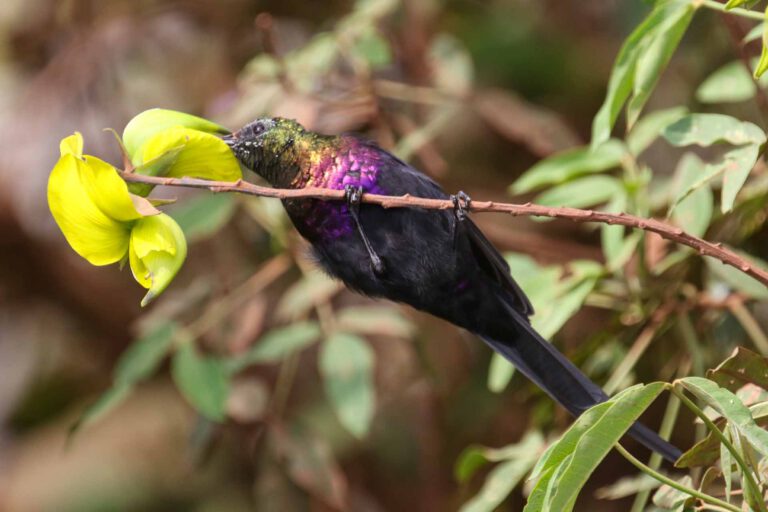
Tacazze Sunbird
Nectarinia tacazze
A big highland sunbird that glows purple and bronze in the sun, feeding on flowers along the crater rim.
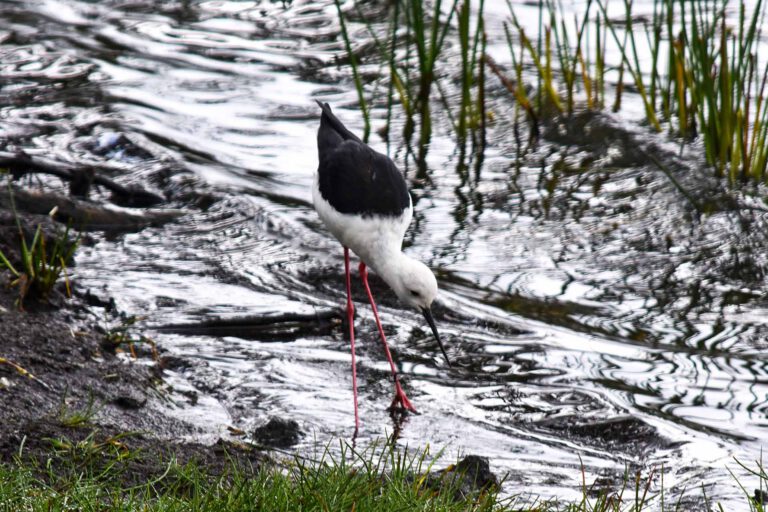
Black-winged Stilt
Himantopus himantopus
Pink legs longer than seems sensible, wading the soda lakes among the flamingos.
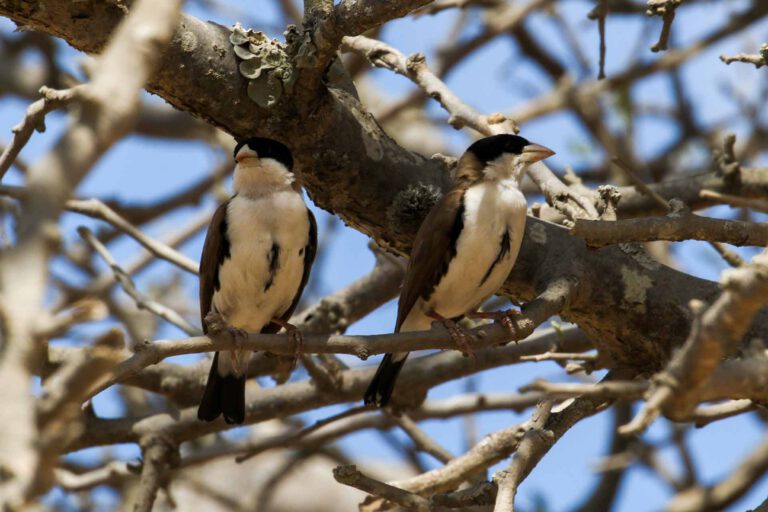
Black-capped Social Weaver
Pseudonigrita cabanisi
Colonies of untidy nests in the thorn trees, and a chattering, sociable bird of the driest bush.
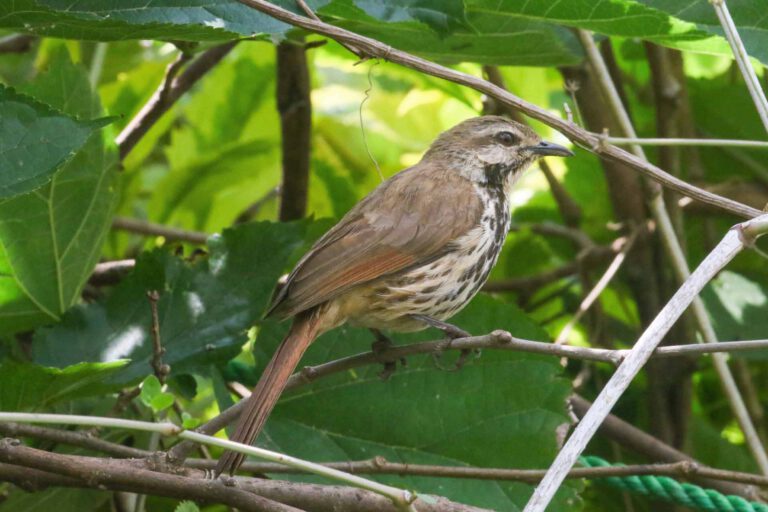
Spotted Morning-Thrush
Cichladusa guttata
The first song of the day at most lodges, rich and varied, from a spotted bird that keeps to the shadows.
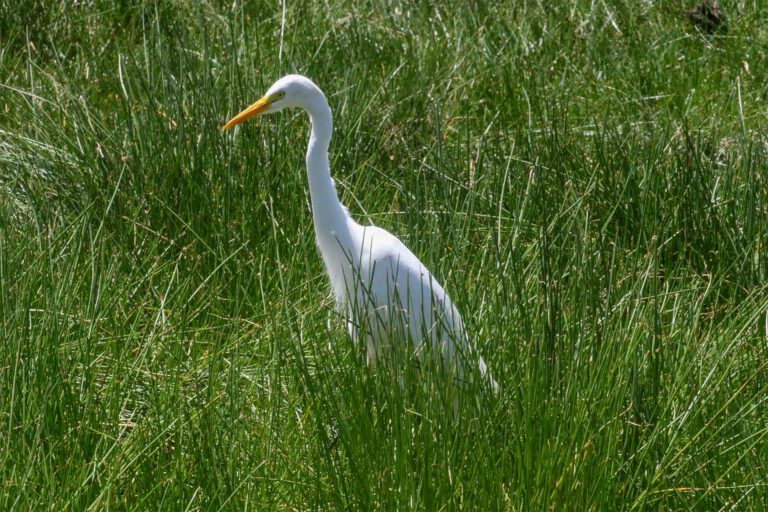
Intermediate Egret
Ardea intermedia
A quiet white egret of marshes and lake edges, between the Great and Little Egrets in size and easy to overlook.
African Fish Eagle
Icthyophaga vocifer
The voice of Africa. A white-headed eagle whose ringing call carries across every lake and river.
Ruaha Red-billed Hornbill
Tockus ruahae
Described as a species only in 2005 and named after the park. The hornbill that makes Ruaha a birding destination.
Ross’s Turaco
Tauraco rossae
Deep violet with a yellow face and crimson wings. One of the most beautiful birds in Africa, and Gombe is where we see it.
Crowned Hornbill
Lophoceros alboterminatus
A neat, dark hornbill with a red bill and a white belly, usually in pairs along the forest edge.
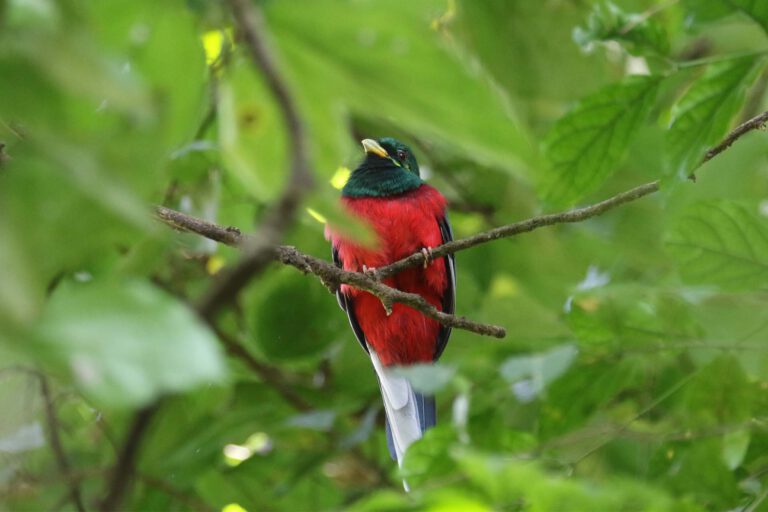
Narina Trogon
Apaloderma narina
Emerald back, scarlet belly, and a habit of sitting absolutely still. Finding one is a highlight of any forest walk.
Greater Flamingo
Phoenicopterus roseus
The tallest flamingo, pale pink with a pink, black-tipped bill. It sifts small invertebrates from the mud rather than algae.
Chestnut-banded Plover
Charadrius pallidus
A small, pale plover with a fine chestnut breast band, found almost only on the shores of salt and soda lakes.
Great White Pelican
Pelecanus onocrotalus
Huge white pelicans that often fish in groups, herding fish into the shallows before scooping them up together.
Papyrus Gonolek
Laniarius mufumbiri
A brilliant red, black and yellow bushshrike that lives only in papyrus swamps around the Lake Victoria basin.
Grey Parrot
Psittacus erithacus
Grey parrots on Rubondo descend from birds confiscated from the illegal pet trade and released on the island.
Abbott’s Starling
Poeoptera femoralis
A scarce starling of highland forest in Kenya and northern Tanzania. The male is glossy black with a white belly.
Kilimanjaro White-eye
Zosterops eurycricotus
A small green-and-yellow white-eye with a broad white eye-ring, found in the highland forests of northern Tanzania.
Pied Kingfisher
Ceryle rudis
A black-and-white kingfisher that hovers over open water before plunging in after fish.
Goliath Heron
Ardea goliath
The world’s largest heron, standing motionless in the shallows for long periods before striking at big fish.
Keep exploring
Plan around what you want to see
Every guide links to the destinations and safaris where it fits, so you can build a trip around a species, a bird list or an activity.
Start planning your safari
Tell us your dates and the birds or animals you most want to see. We’ll reply within 24 hours with a route and a full quote.