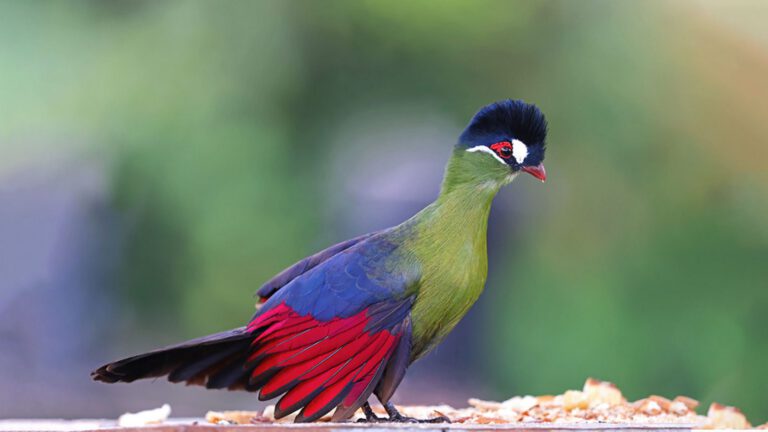
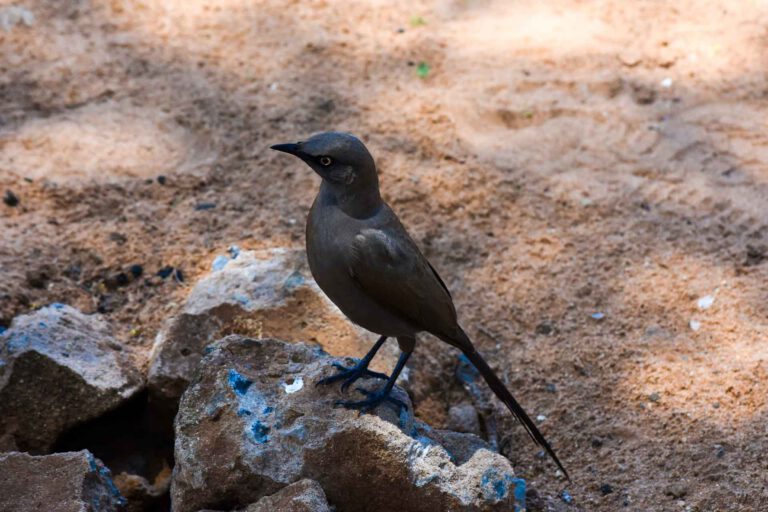
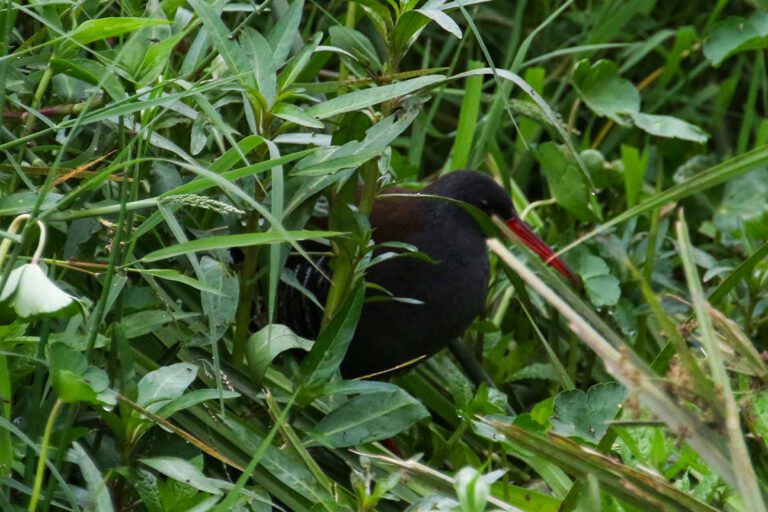
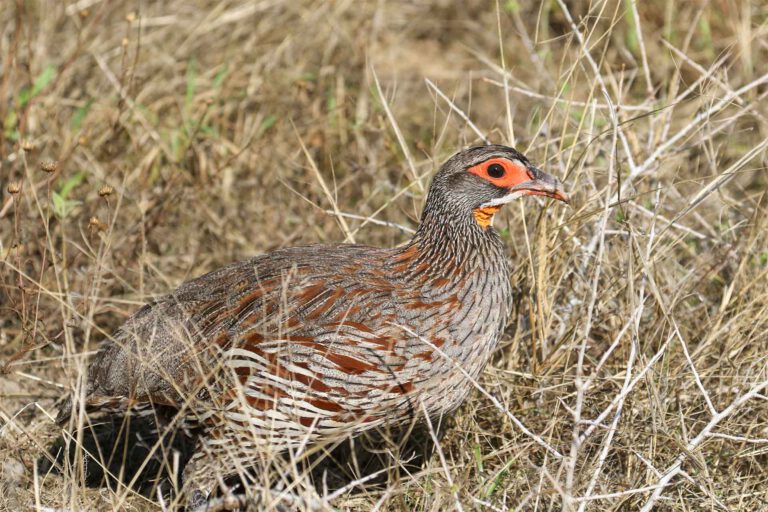
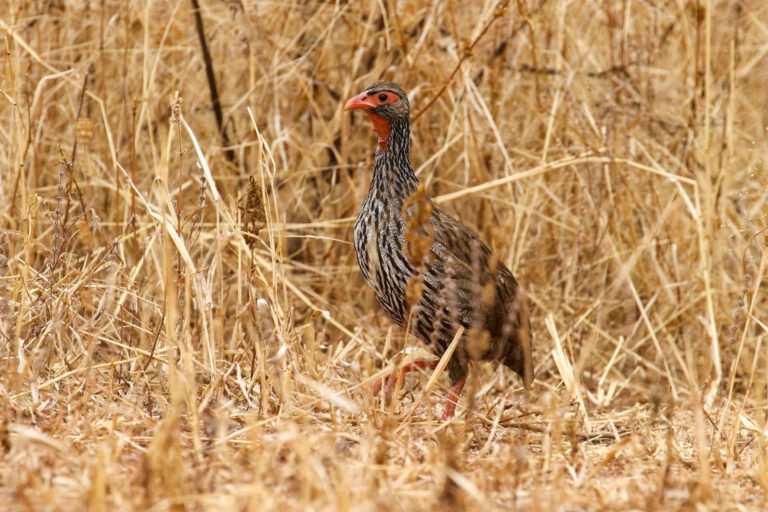
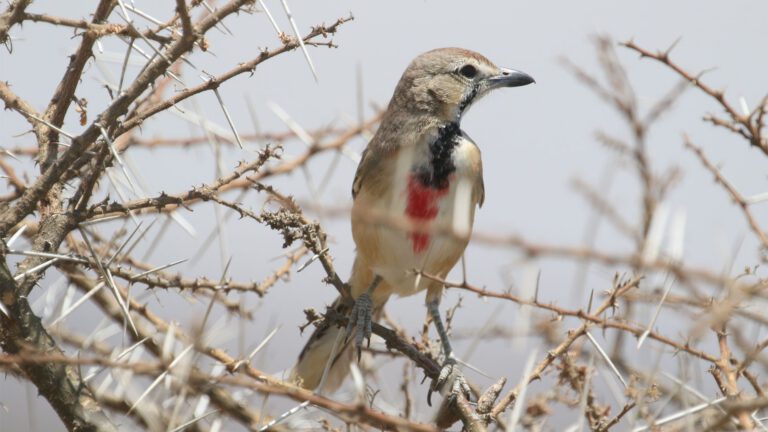
Nine days is the length where you stop choosing between birds and big game. Three days in the Serengeti add the endemics you can’t get closer to Arusha, such as Grey-breasted Spurfowl and Fischer’s Lovebird, along with the cats on the kopjes.
A guest on a similar route with us last August recorded around 400 species and photographed more than 300 of them, and still saw nearly all the big mammals.
Birds and wildlife to look for
Grey-breasted Spurfowl
Fischer’s Lovebird
Karamoja Apalis
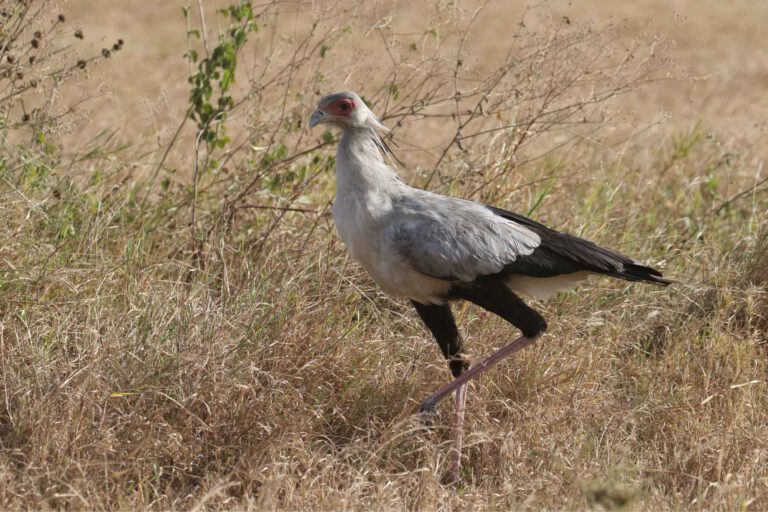
Secretarybird
Big Five
Day-by-day itinerary
Times and drives are approximate. Your guide adjusts each day to the weather, the wildlife and you.
Day 1: Arusha National Park
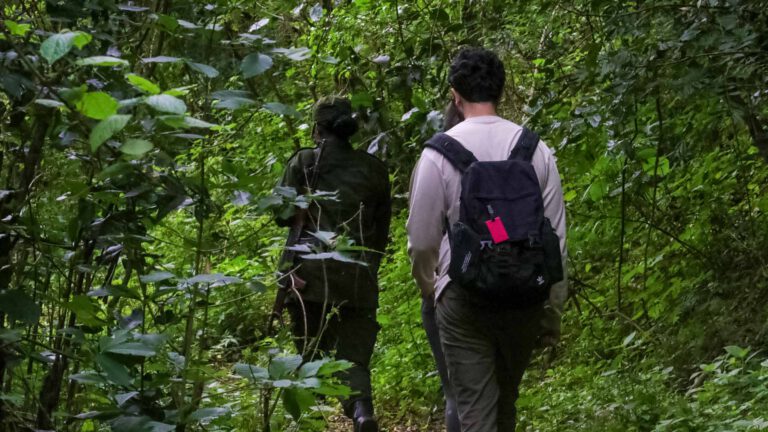
Pick-up at 6:00 and a full day in Arusha National Park: montane forest in the morning for turacos, trogons and mixed flocks, the Ngurdoto rim at midday, and the Momella Lakes for flamingos and waterbirds in the afternoon. It’s a relaxed first day that gets your list off to a flying start.
Overnight
Lodge near Arusha
Meals
Breakfast, lunch, dinner
Travel
About 45 minutes each way
Day 2: Arusha to Tarangire
South-west to Tarangire through dry country and scattered baobabs. We enter by late morning and spend the rest of the day on the river circuit: Ashy Starlings and Yellow-collared Lovebirds, both Tanzanian endemics, plus big elephant herds, giraffe and zebra drinking at the river, and a good chance of lion in the shade. Picnic lunch in the park.
Overnight
Lodge or tented camp near Tarangire
Meals
Breakfast, lunch, dinner
Travel
About 2 hours, then game drive
Day 3: Tarangire to Lake Manyara
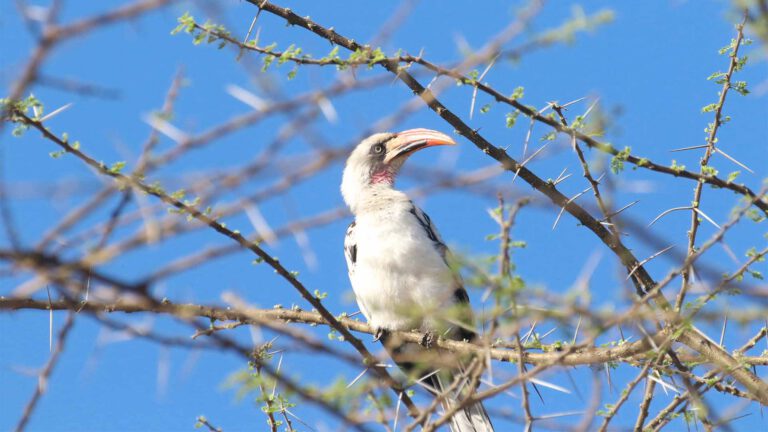
An early morning drive in Tarangire for Rufous-tailed Weaver, Tanzania Red-billed Hornbill and raptors, then on to Lake Manyara after lunch. In the groundwater forest we look for Silvery-cheeked Hornbill among the baboons and blue monkeys, and the lakeshore adds pelicans, storks, flamingos and waders. We climb the escarpment to Karatu for the night.
Overnight
Lodge near Karatu
Meals
Breakfast, lunch, dinner
Travel
About 2 hours between parks
Day 4: Into the Serengeti via the crater highlands
A full travel day with birding all the way. We drive up through the forested Ngorongoro highlands, stop at the crater viewpoint, and descend through Maasai grazing land onto the short-grass plains. At Naabi Hill gate, the entrance to the Serengeti, the kopjes are a good stop for lunch and a stretch. From there the plains open out, the name comes from the Maa word for endless plains, and the drive to Seronera is a slow game drive. Secretarybirds stalk the grass, Grey-breasted Spurfowl, a Tanzanian endemic, feed beside the track, and lion and cheetah are often seen.
Overnight
Tented camp in the central Serengeti
Meals
Breakfast, lunch, dinner
Travel
About 6–7 hours with stops and game driving
Day 5: Serengeti: endemics and the kopjes
We head out at dawn, when the predators are most active and the birds are singing. The central Serengeti around the Seronera River is excellent for leopard in the riverine trees and lion on the kopjes. For birders the targets are Fischer’s Lovebird, Grey-breasted Spurfowl, Usambiro Barbet and Karamoja Apalis in the whistling-thorn thickets, along with a huge variety of raptors, larks, pipits and seasonal migrants. We return to camp for lunch and a rest through the midday heat, then head out again for the late-afternoon light.
Overnight
Tented camp in the central Serengeti
Meals
Breakfast, lunch, dinner
Travel
Morning and afternoon game drives
Day 6: Serengeti: chasing what’s left
Today’s plan depends on the season and on what’s still missing from your target list. We might head east towards the Gol kopjes for open-plains birds and cheetah, or follow the migration herds if they’re within reach. A full day out with a picnic lunch gives us the most ground. By now your list is usually long enough that the focus shifts to good photographs and those last difficult species.
Overnight
Tented camp in the central Serengeti
Meals
Breakfast, lunch, dinner
Travel
Full-day game drive
Day 7: Serengeti to the Ngorongoro rim
A final morning game drive in the Serengeti, then back across the plains to the crater highlands. There’s a chance to stop at Olduvai Gorge, where some of the earliest human fossils were found, if you’d like to. We reach the rim in the afternoon and bird the highland forest for Golden-winged Sunbird, Tacazze Sunbird and other montane species before settling in for a cold, clear night at 2,300 metres.
Overnight
Lodge on the crater rim or near Karatu
Meals
Breakfast, lunch, dinner
Travel
About 4–5 hours with stops
Day 8: Ngorongoro Crater
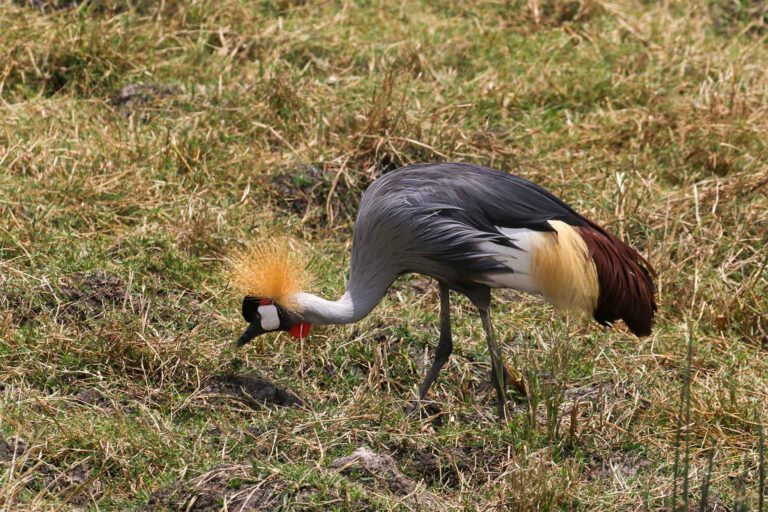
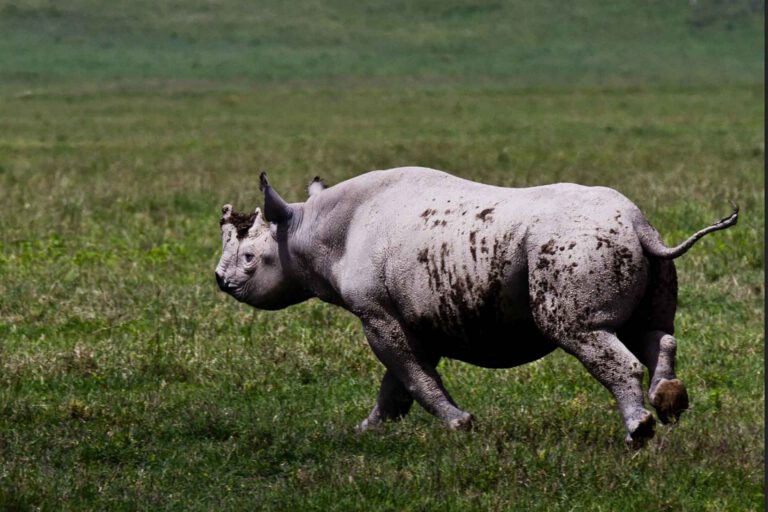
Down into the crater at opening time. Kori Bustard, Grey Crowned Crane and flamingos are almost certain, and the crater gives your best chance of black rhino anywhere in Tanzania. Lions, hyenas and buffalo are everywhere. After lunch at the Ngoitokitok springs we drive out and return to Karatu for a relaxed final evening.
Overnight
Lodge near Karatu
Meals
Breakfast, lunch, dinner
Travel
Crater game drive
Day 9: Karatu to Arusha
An easy morning with birding in the lodge gardens, then the drive back to Arusha, with a stop at Mto wa Mbu if you’d like one. We drop you at your hotel or at Kilimanjaro Airport, and email your full trip list the same day.
Overnight
End of trip
Meals
Breakfast, lunch
Travel
About 2.5 hours to Arusha
What’s included
Included
Private 4x4 with pop-up roof, just for your group
Professional guide (a specialist bird guide on birding trips)
All park, conservation and crater fees
Accommodation and meals as listed
Drinking water in the vehicle
Pick-up and drop-off at Kilimanjaro Airport (JRO) or your Arusha hotel
Not included
International flights and visa
Travel insurance
Tips for your guide and lodge staff
Drinks at lodges
Optional extras such as a balloon flight
Price
We quote per person, based on your group size, season and accommodation level. Send an enquiry and you’ll have a full price within 24 hours. There’s nothing to pay until you confirm.
Good to know before you book
Getting here: fly into Kilimanjaro International Airport (JRO), about an hour from Arusha. We meet you at arrivals. Read arriving in Arusha.
Health: see a travel clinic about vaccines and malaria prevention at least a month before you go. The CDC Travelers’ Health: Tanzania page is a useful starting point.
Most days start between 6:00 and 6:30, because the first hours after sunrise have the best light and the most active animals and birds. We usually take a picnic lunch in the park or return to camp for a midday rest, then head out again in the late afternoon. Parks close at sunset, so evenings are at the lodge.
Can the itinerary be changed?
Yes. Every trip is private, so we can add days, swap parks, change the accommodation level or slow the pace. Tell us what you’d like, and we’ll send a revised plan and price.
What vehicle will we use?
A 4x4 safari vehicle with a pop-up roof for viewing and photography, charging points and a window seat for everyone. The vehicle and guide are yours alone for the whole trip.
How do I book and pay?
Send an enquiry and we’ll reply within 24 hours with a tailored itinerary and a full quote. Once you’re happy, we take a deposit to confirm, with the balance due before you travel. We’ll give you the exact terms in writing.
What if I have dietary needs?
Just tell us. Lodges and our camp cooks regularly cater for vegetarian, vegan, gluten-free, halal and other diets.
Northern parks, South Pare, Mkomazi & Usambara Mountains
This 18-day Tanzania birding tour is a life-lister’s odyssey, traversing the avian-rich landscapes of Northern Tanzania and the biodiverse Eastern Arc Mountains.